Discover the four seasons of Canada
Planning the best time to visit Canada can feel daunting, but our expert insight makes it simple. Discover when to experience this iconic destination at its most memorable, from vast landscapes to seasonal highlights.

Weather in Canada
Canada offers unique and interesting highlights all year round, but we generally recommend the shoulder seasons for a holiday. These fall between April and June, and September and November. During these periods, temperatures are ideal for exploring, there are fewer crowds and prices are often more affordable.

Canada offers unique and interesting highlights all year round, but given the size and diversity of its landscapes, the best time to travel also depends on where you want to go and what you’d like to do.
It’s worth knowing that the seasons tend to be more extreme than in the UK, with winters becoming especially harsh the further inland and towards the Rocky Mountains you travel. In contrast, the British Columbia coast offers milder seasons and a lush rainforest climate, thanks to the Pacific Ocean.

Spring
The spring months in Canada are beautiful as nature blooms into its full potential. Generally, spring lasts from March until May, but it can also spread into mid-June in some parts of the country. During this time of year, maple syrup seeps from the trees, wildflowers colour the landscape, and melting snow creates cascading waterfalls.

Spring is considered a shoulder season, when travel is generally quieter, prices are more affordable, and temperatures are mild. It can be rainy, but most sea-level hiking trails throughout British Columbia and Nova Scotia are free of snow. Average daytime temperatures range from around 8 to 15°C, gradually rising as the season progresses.
British Columbia is generally warmer than other provinces at this time of year. In the Okanagan Valley wine region, for example, temperatures can already reach 28°C in May.

Summer
From snow-capped mountain peaks to turquoise lakes, Canada’s contrasts are breathtaking during the summer months of June to August. With a little luck, the warmth can even extend into mid-September.
An outdoor enthusiast’s paradise, Canada is ideal for camping, road trips, hiking, mountain biking, kayaking and almost any outdoor activity you could wish for during these months.
This is also a great time to spot wildlife, from grizzly bears and caribou to orcas. Banff and Jasper National Parks, in particular, are known for the many wild animals that live there.

Summer is the peak season for travel to Canada. If you’re visiting during this time, be sure to plan ahead to secure the best rates and accommodations. The weather is warm, with average temperatures of 25 to 30°C.
However, evenings and northern regions can still be cool. For example, summer temperatures in the Canadian Rockies fluctuate between 13 and 20°C. Don’t forget to pack layers for your visit.

Autumn
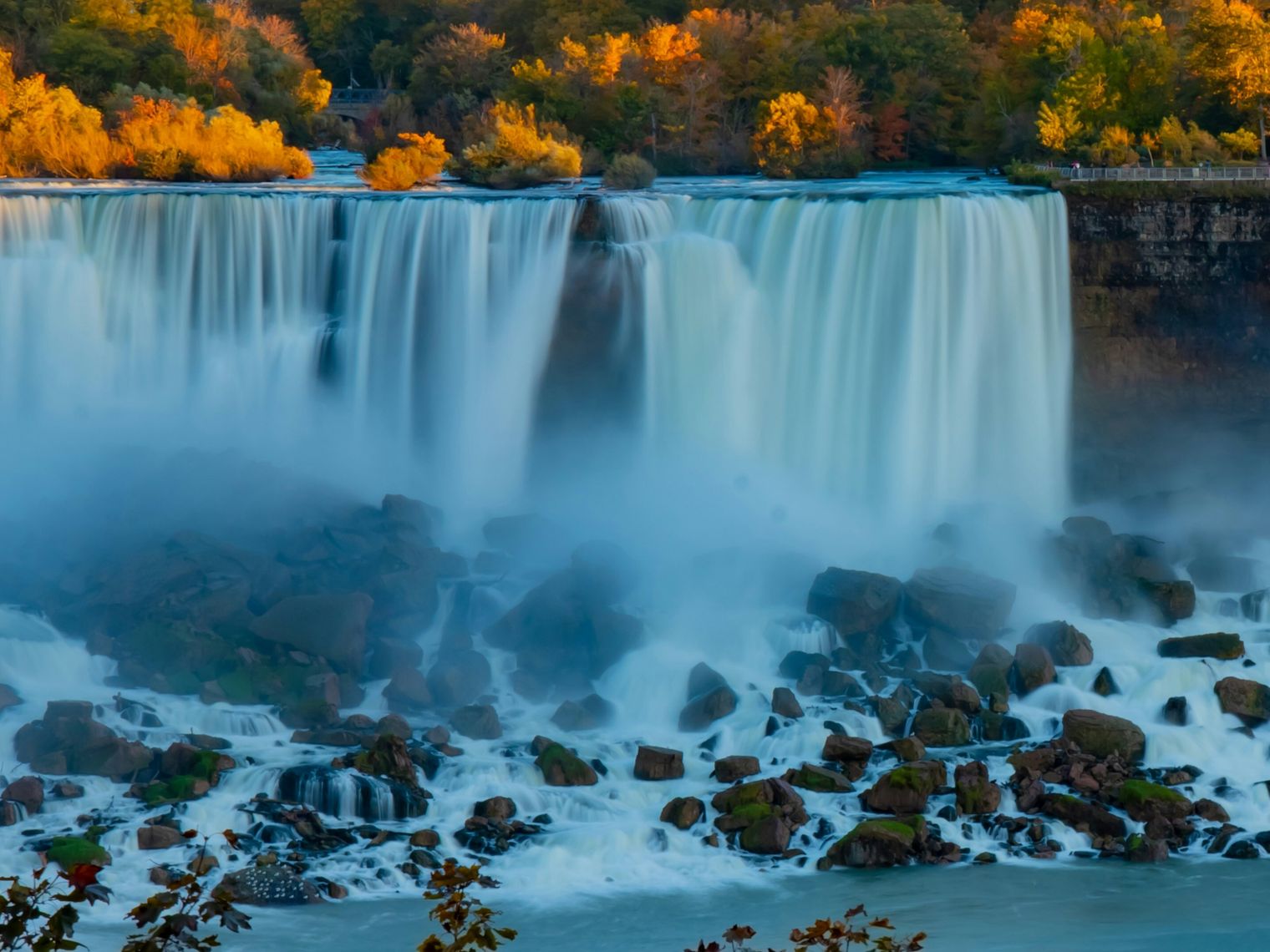
As the Canadian maple leaves change to vibrant colours of orange, red and yellow, the autumn months from September to November are a sight to be seen. Eastern Canada, such as the provinces of Nova Scotia and New Brunswick in particular, is known for the mesmerising crimson shades and fall foliage that colour every tree.

Autumn is also considered a shoulder season in Canada. During this time, you can expect light rain and the occasional dusting of snow in some areas during your travels. Temperatures vary across the country but are generally around 8 to 13°C.
The national parks are less busy, with plenty of hiking opportunities. If hiking isn’t for you, enjoy a scenic road trip through the Rocky Mountains. The Icefields Parkway won’t disappoint either.
Winter
The Canadian winter months can seem harsh, but that doesn’t mean you should rule out a visit, especially if you enjoy winter sports, dazzling white landscapes and perhaps even the chance to see polar bears. Winter generally lasts from December to February, but much to the anguish of Canadians, it can creep into mid-March.
For prominent ski destinations such as Whistler, Banff and Lake Louise, this is the time of year when they truly come to life. Hit the slopes, learn to snowboard, try tobogganing or snow tubing, then warm up in a cosy chalet with a cup of hot chocolate by the fireplace to finish your day.
There are plenty of family-friendly activities for everyone to enjoy.

Frequently asked questions
We recommend travelling from April to June or September to November. These months often bring milder weather, fewer visitors and better value than July and August, while still giving you good conditions for scenic drives, wildlife, walking and time outdoors.
Wildlife viewing varies by region, but May to October is generally strongest for bears, whales, elk and birdlife. On Vancouver Island, whale watching is often good from May to October, while bear viewing is commonly strongest from late summer into autumn, depending on the location and salmon runs. Our travel experts can advise you on the best times and places to travel for wildife viewing.
September is often one of the best months to visit Canada, especially for a self-drive holiday. The weather is usually still comfortable, summer crowds have eased, autumn colour begins in many regions, and key routes in the Rockies, British Columbia and Eastern Canada are still very workable.